Since 1 July 2026, the duty-free small consignment into the EU is history. Until then, parcels under 150 euros in goods value crossed the border without customs duty; only import VAT applied. That exact threshold is now gone. For you as a Swiss shop that ships to Germany, Austria, France or the rest of the EU, this means: every shipment is now a customs procedure with costs. Here's what applies, what it costs and how you respond — no buzzwords.
What changed on 1 July 2026
The EU has scrapped the 150-euro duty-free threshold for consignments from third countries, and from the EU's perspective Switzerland is a third country. The reason is political: under the old threshold, billions of small parcels from the Far East flooded into the single market every year, often with a value declared far too low. The EU now draws the line at zero.
For you, only the outcome matters: from the very first shipment, customs duty applies — even on a T-shirt for 19 euros. What's new isn't the rate, but that there's any amount at all where before there was a clean zero.
The 3-euro flat rate — the most important part first
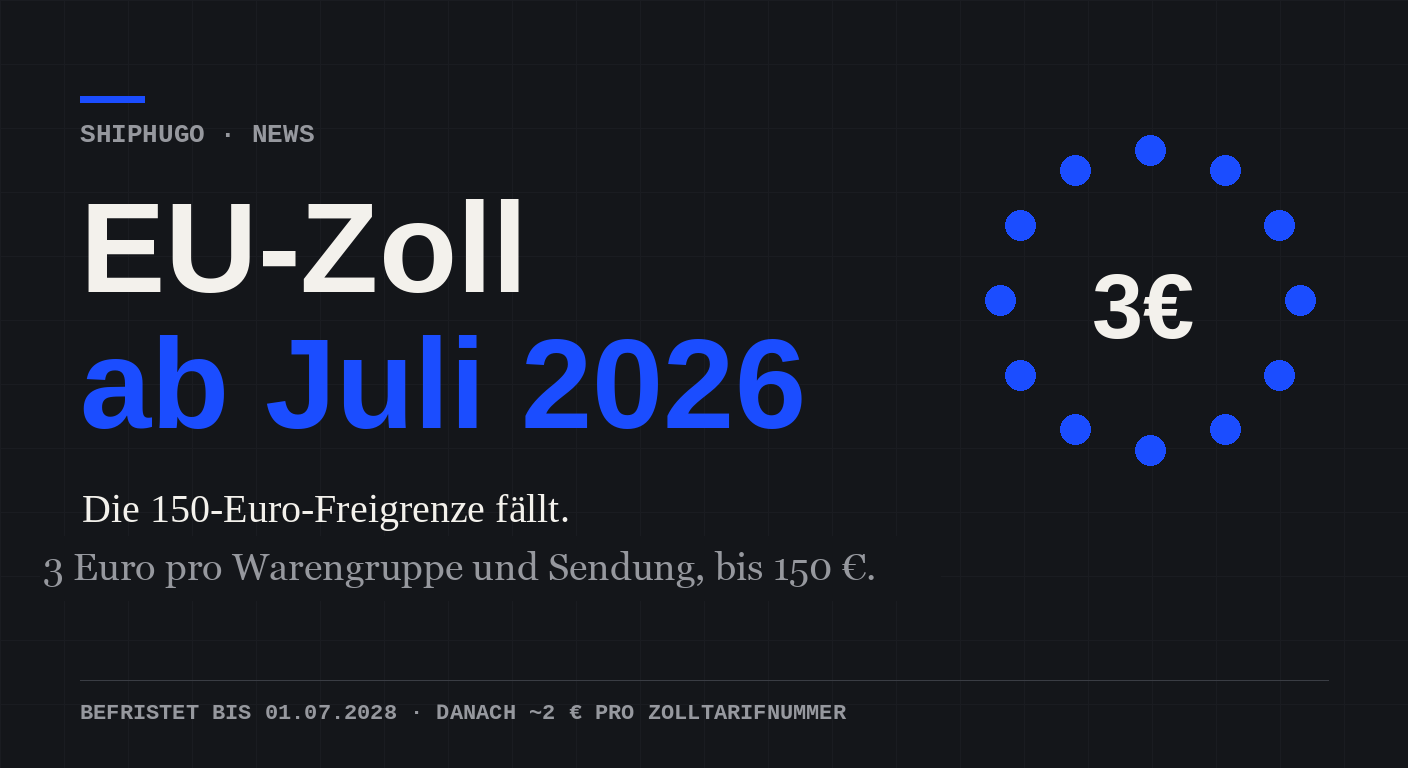
So that a full customs duty doesn't have to be calculated for every cheap parcel, a simplified flat rate applies during the transition:
- 3 euros per item (unit) for small consignments up to 150 euros in goods value.
- The flat rate is temporary, until 1 July 2028; after that, the permanent rules kick in.
- For these small consignments, it replaces the customs duty — which is laborious to calculate — with a fixed amount.
Three euros sounds like little. For a single parcel, it is. At 4'000 EU shipments a month, it's 12'000 euros, every month, in customs flat rate alone, on top of postage and handling. That's the number that hits your margin.
For pricier shipments over 150 euros in goods value, the regular customs duty under the EU's Common Customs Tariff still applies, for example around 12 percent on clothing or up to 17 percent on shoes.
What's planned after 2028: around 2 euros per customs tariff number
The 3-euro flat rate is a bridge, not a permanent state. For the time after 1 July 2028, a processing fee of around 2 euros per customs tariff number is planned — that is, per type of goods in the shipment. A shipment with several different product groups can then be charged more than once.
The exact design isn't final yet. So don't plan around a fixed figure for 2028; plan instead for cross-border into the EU staying structurally more expensive, not just temporarily.
What this means for your shop in practice
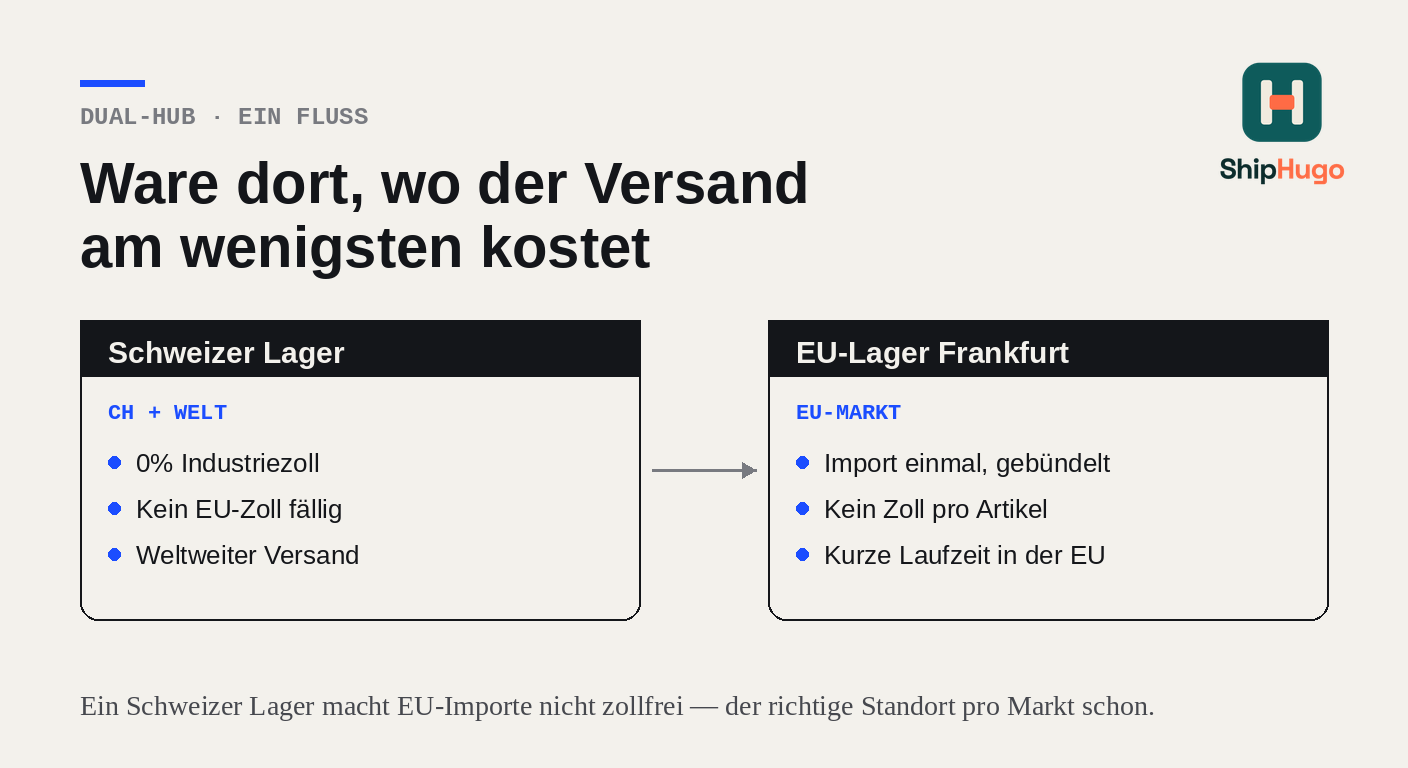
The key point many get wrong: A location in Switzerland does not make your goods duty-free when imported into the EU. When the parcel crosses the EU border from Switzerland, it is and stays a shipment from a third country, with the new flat rate.
What helps is the right storage location per market:
- Switzerland and world orders keep running from Switzerland. Switzerland has 0 percent industrial tariffs, and no EU customs duty applies to these shipments at all, because they're never imported into the EU.
- EU orders run from a location inside the EU. Goods already sitting in the single market are no longer cleared through customs when sold to your EU customers. The import happens once, in bulk, instead of on every single parcel.
That's the honest lever: not one location for everything, but goods where they cost the least to ship. From Switzerland for CH and the world, from the EU for the Europe business.
Run the numbers on your case
How much the new flat rate really costs you at your volume, and what you save with split warehousing, you'll see in a minute: enter your order count, cart value and EU share into the EU customs calculator on the home page. It puts a single warehouse against the split solution and shows you the difference in euros.
You'll find more on the reasoning and sources on the Import Advantage & Location Routing page.
In short: the threshold is gone, the 3-euro flat rate applies until 2028, and after that comes a fee per customs tariff number. If you ship a lot into the EU, plan your warehousing by market from now on, not by habit.
Guideline figures for orientation, not tax or customs advice. For your specific case, we're happy to run the numbers with you.
This post comes from the ShipHugo editorial team. Questions about your specific case? Talk to us.